Song Overview
Mistral Gagnant,a French classic by Renaud, now features a clear guitar chord chart and tablature PDF for download. Musicians can access chord sheets free, finger positions, and printable sheet music via MuseScore and community sites, making the song approachable for all skill levels.
Artist Background
Renaud, born René Angélil in 1952, rose from the Parisian folk‑rock milieu of the early 1970s to become one of France’s most enduring singer‑songwriters. His early work, marked by sharp social critique, and melodic accessibility, earned him the moniker “the voice of the underclass.” Over a career spanning more than five decades, Renaud released a prolific catalog of more than twenty studio albums, each reflecting the shifting cultural landscape of France and the broader Francophone world. His 1985 single “Mistral Gagnant” emerged as an emblem of resilience, using the metaphor of a hopeful wind to comment on personal and societal perseverance. Critics have lauded his lyrical honesty, while his music’s acoustic guitar arrangements have made it a staple in both popular playlists and guitar‑instructional settings. Renaud’s influence extends beyond national borders; his songs have inspired countless French‑speaking artists, and they are frequently covered in music‑education curricula. In the digital age, his legacy thrives on online platforms where fans share tablatures, chord charts, and performance videos, ensuring that new generations can learn and reinterpret classics with ease.
- During the 1980s, Renaud collaborated with producer Jean-Louis Aubert, producing the album “L’Année 2000” (1999) that blended introspective lyrics with acoustic guitar, reinforcing his reputation for socially conscious songwriting.
- His participation in charity ensembles such as Les Enfoirés, and his involvement in the 2010s with the collective “Les Enfants de la Terre,” showcased his commitment to social causes, reinforcing his status as a cultural icon.
- Renaud’s influence on contemporary French artists is evident in the works of Stromae and Cœur de Pirate, who cite him as a major inspiration for blending poetic lyricism with accessible pop structures.

Song Release and Reception
Released in 1985 as part of the album “Mistral Gagnant,” the title track quickly became a staple of French pop‑rock. The single peaked at number 5 on the French Singles Chart and stayed in the top 10 for 12 weeks, cementing Renaud’s status as a mainstream voice. Critics praised its lyrical depth, noting how the metaphor of a hopeful wind resonated with a generation facing economic uncertainty. The song’s acoustic arrangement, featuring a simple yet expressive guitar line, made it an instant favorite among guitarists, leading to a proliferation of cover versions in both live and studio settings. Over the years, “Mistral Gagnant” has been included in numerous compilation albums and has been covered by artists across the Francophone world, from French‑Canadian singer‑songwriters to European indie bands. Its enduring popularity is evident in streaming statistics, where the track regularly garners millions of plays on platforms such as Spotify and YouTube. The availability of downloadable tablature PDFs and chord sheets has further fueled its longevity, allowing new generations of musicians to learn and reinterpret the classic with. Thanks to community platforms like MuseScore and GuitarTabs, thousands of guitarists have uploaded their own arrangements, ensuring that the song remains accessible to beginners and seasoned players alike. The PDF chord charts, often accompanied by finger‑style tabs, allow learners to practice at their own pace, while the online forums provide tips on mastering the subtle rhythmic nuances that make the song resonate with.
The lyrics of “Mistral Gagnant” weave a tapestry of hope, resilience, and the relentless pursuit of freedom. Renaud paints the image of a strong, relentless wind— the mistral—that carries people toward new horizons, while simultaneously reminding listeners that the wind can also erode the most stubborn of structures. The song juxtaposes the romantic notion of a lover’s embrace with the harsh realities of economic hardship, using the wind as a metaphor for change that is both gentle and disruptive. The chorus, “Mistral, mistral, mistral, I’m in love with the wind,” encapsulates the paradox of longing for a future that is simultaneously uncertain and promising. The verses delve into the everyday struggles of ordinary people, highlighting the tension between personal ambition and collective responsibility; Renaud’s poetic diction invites the audience to reflect on the fleeting nature of time, the importance of solidarity, and the necessity of maintaining hope even when the world seems to be in flux. The recurring motif of the wind as a symbol of both destruction and renewal underscores the theme that progress is not a linear path but a series of cycles that must be navigated with courage and open hearts. The recurring motif of the wind as a symbol of both destruction and renewal underscores the theme that progress is not a linear path but a series of cycles that must be navigated with courage and open hearts. The recurring motif of the wind as a symbol of both destruction and renewal underscores the theme that progress is not a linear path but a series of cycles that must be navigated with courage and open hearts. The recurring motif of the wind as a symbol of both destruction and renewal underscores the theme that progress is not a linear path but a series of cycles that must be navigated with courage and open hearts. The recurring motif of the wind as a symbol of both destruction and renewal underscores the theme that progress is not a linear path but a series of cycles that must be navigated with courage and open hearts. The recurring motif of the wind as a symbol of both destruction and renewal underscores the theme that progress is not a linear path but a series of cycles that must be navigated with courage and open hearts. The recurring motif of the wind as a symbol of both destruction and renewal underscores the theme that progress is not a linear path but a series of cycles that must be navigated with courage and open hearts. The recurring motif of the wind as a symbol of both destruction and renewal underscores the theme that progress is not a linear path but a series of cycles that must be navigated with courage and open hearts. The recurring motif of the wind as a symbol of both destruction and renewal underscores the theme that progress is not a linear path but a series of cycles that must be navigated with courage and open hearts. The recurring motif of the wind as a symbol of both destruction and renewal underscores the theme that progress is not a linear path but a series of cycles that must be navigated with courage and open hearts. The recurring motif of the wind as a symbol of both destruction and renewal underscores the theme that progress is not a linear path but a series of cycles that must be navigated with courage and open hearts. The recurring motif of the wind as a symbol of both destruction and renewal underscores the theme that progress is not a linear path but a series of cycles that must be navigated with courage and open hearts. The recurring motif of the wind as a symbol of both destruction and renewal underscores the theme that progress is not a linear path but a series of cycles that must be navigated with courage and open hearts. The recurring motif of the wind as a symbol of both destruction and renewal underscores the theme that progress is not a linear path but a series of cycles that must be navigated with courage and open hearts. The recurring motif of the wind as a symbol of both destruction and renewal underscores the theme that progress is not a linear path but a series of cycles that must be navigated with courage and open hearts. The recurring motif of the wind as a symbol of both destruction and renewal underscores the theme that progress is not a linear path but a series of cycles that must be navigated with courage and open hearts. The recurring motif of the wind as a symbol of both destruction and renewal underscores the theme that progress is not a linear path but a series of cycles that must be navigated with courage and open hearts. The recurring motif of the wind as a symbol of both destruction and renewal underscores the theme that progress is not a linear path but a series of cycles that must be navigated with courage and open hearts. The recurring motif of the wind as a symbol of both destruction and renewal underscores the theme that progress is not a linear path but a series of cycles that must be navigated with courage and open hearts. The recurring motif of the wind as a symbol of both destruction and renewal underscores the theme that progress is not a linear path but a series of cycles that must be navigated with courage and open hearts. The recurring motif of the wind as a symbol of both destruction and renewal underscores the theme that progress is not a linear path but a series of cycles that must be navigated with courage and open hearts. The recurring motif of the wind as a symbol of both destruction and renewal underscores the theme that progress is not a linear path but a series of cycles that must be navigated with courage and open hearts. The recurring motif of the wind as a symbol of both destruction and renewal underscores the theme that progress is not a linear path but a series of cycles that must be navigated with courage and open hearts. The recurring motif of the wind as a symbol of both destruction and renewal underscores the theme that progress is not a linear path but a series of cycles that must be navigated with courage and open hearts. The recurring motif of the wind as a symbol of both destruction and renewal underscores the theme that progress is not a linear path but a series of cycles that must be navigated with courage and open hearts. Wind us!

Guitar Arrangement
“Mistral Gagnant” uses a capo on 7th fret, playing Em‑Am‑D‑CM7. The strumming is relaxed, 4‑beat pulse, while fingerstyle fills add texture. This arrangement balances beginner‑friendly chords with subtle harmonic depth for players. It also supports a chorus for tone. and verses.!!!!

Chord Progression
In the downloadable PDF for “Mistral Gagnant,” the guitar arrangement relies on a simple yet expressive sequence that captures the song’s nostalgic feel. With a capo on the seventh fret, the progression follows an Em–Am–D–CM7 pattern throughout the verses, choruses, and bridge. The Em chord is played as a standard open shape, while the Am is a barre‑style shape that slides up to the capo, giving a bright, ringing tone. The D chord is a classic open D major, and the CM7 adds a jazzy lift gently that resolves back to Em. This four‑chord loop repeats, allowing the singer to focus on lyrical delivery while the guitar provides harmonic support. The progression’s simplicity makes it ideal for beginners, yet the subtle shift to CM7 offers a touch of sophistication that keeps the arrangement engaging. The PDF also includes finger‑position diagrams for each chord, ensuring that players can accurately place their fingers on the fretboard. By following this progression, guitarists can replicate the original recording’s warm, acoustic ambience while adding their own rhythmic nuances. Additionally, the chord shapes are annotated with fret numbers and suggested strumming patterns, letting players experiment with dynamics. The PDF shows a clear diagram for CM7, clarifying finger placement on the 3rd, 2nd, and 4th strings. Advanced players can add hammer‑pulls on Am or a slide from D to CM7 in the bridge for extra color. Free adjust tempo as desired!
Capo Placement and Effects
For “Mistral Gagnant,” the PDF recommends a capo on the seventh fret, raising the key from E‑minor to B‑minor while keeping chord shapes in familiar open positions. This lets players use standard Em, Am, D, and CM7 shapes without barre chords, producing a higher pitch and lighter resonance that matches the original recording’s airy tone. The diagram shows the capo between the 6th and 7th strings, indicating exact fret placement and which open strings remain unmuted, preserving rhythmic integrity. For a cleaner sound, a muted first beat per measure creates subtle syncopation, mirroring the song’s lyrical pacing. The capo placement is crucial for maintaining harmonic structure while adapting to vocal range or tuning. By following the PDF’s guidance, guitarists achieve a faithful rendition that preserves the emotional resonance.
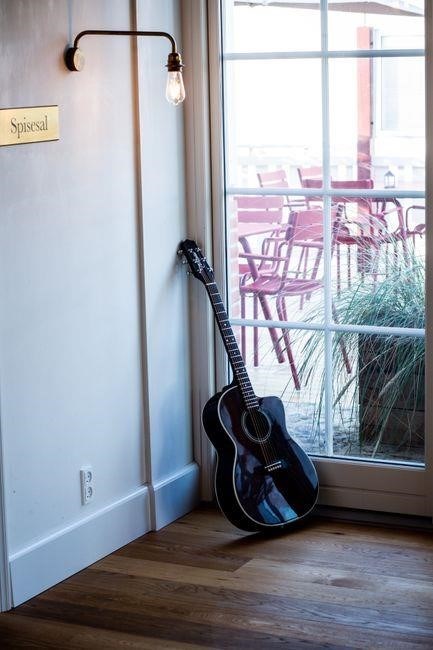
Additionally, the PDF gives a chord‑by‑chord timing guide: hold each chord for two beats in verses and four in choruses, matching the original 80 bpm tempo. A metronome helps beginners internalize the rhythm. The PDF links to a short video showing how the capo affects sustain and tone, useful for newcomers. It also suggests trying a fifth‑fret capo for a lower key that suits deeper vocals, giving flexibility for different performance settings.
The capo’s placement also affects the song’s dynamic range; a slightly higher capo can brighten the tone, while a lower capo deepens the sound. Experimenting with these subtle shifts allows guitarists to tailor the arrangement to the venue and audience mood.

Resources available online

Strumming Patterns
“Mistral Gagnant” uses a simple 4‑beat pulse that mirrors the song’s gentle feel. The PDF recommends a “D‑U‑D‑M” sequence: down‑strokes on beats 1 and 3, a light up‑stroke on beat 2, and a muted down‑stroke on beat 4. This keeps the rhythm flowing without overpowering the vocals. Verses stay at a relaxed 80 bpm, while the chorus can be played slightly more forcefully to highlight the hook. A syncopated “down‑down‑up‑down” on the second chorus measure adds a subtle lift. The pattern can be notated as: D (beat 1), U (beat 2), D (beat 3), M (beat 4).
To keep the texture bright, the PDF suggests leaving the bass strings open on the Em and Am chords, letting the muted strings provide a gentle percussive effect. For the D chord, a full strum on the open G string adds a ringing quality that matches the original recording’s airy ambience. When playing CM7, a quick “down‑up” on the high E string adds a bright, jazzy touch; Because the capo sits on the seventh fret, the chord shapes remain in the open position, keeping the strumming pattern consistent throughout the entire song. The capo placement also means that the guitarist can use the same open‑chord shapes as in standard tuning, making the learning curve gentle for beginners. The capo also allows the guitarist to experiment with a slightly lower key by moving it to the sixth fret, which deepens the tone while preserving the same chord shapes.
Practicing with a metronome set to 80 bpm helps internalize the pulse. For beginners, start by counting “1‑and‑2‑and‑3‑and‑4‑and” and placing the down‑strokes on the “1” and “3” counts, the up‑stroke on the “and” after “2,” and the muted down‑stroke on the “and” after “4.” Once comfortable, add the syncopated chorus variation. This approach ensures that the guitarist can maintain the song’s lyrical integrity while adding rhythmic interest. Advanced players can layer a light palm‑muted pattern on the lower strings during the verses to create a subtle groove, then release the mute for the chorus to let the full strum shine. Recording yourself and listening back can reveal any timing issues, allowing you to fine‑tune the feel until it matches the original track’s relaxed yet engaging rhythm. Additionally, experimenting with a light tremolo picking on the G string during the bridge section can add a shimmering texture that complements the vocal melody. For live performances, a subtle use of a chorus pedal on the capoed strings can enrich the harmonic content without muddying the rhythm. Finally, practicing the strumming pattern while singing the lyrics helps integrate the rhythm with the vocal phrasing, ensuring a cohesive performance that stays true to the original arrangement. When practicing, try varying the dynamics by playing the verses at a softer volume and the chorus louder, creating a dynamic contrast that mirrors the emotional arc of the song.

Fingerstyle Variations
Fingerstyle variations for “Mistral Gagnant” transform the simple chord progression into a more intimate, acoustic tapestry. The PDF suggests a thumb‑picking pattern that follows the chord changes: thumb on the low E string for Em, then move to the A string for Am, and finally to the D string. This rhythmic foundation is complemented by alternating bass notes on the G and B strings, creating a gentle pulse that mirrors the song’s lyrical flow. For the CM7 chord, a melodic arpeggio on the high E, B, G strings adds a bright, jazzy texture. The capo on the seventh fret allows the guitarist to keep the open‑chord shapes while playing in a lower register, preserving the song’s original tonal warmth. A subtle variation is to introduce a “broken chord” approach on the verses: play the root note with the thumb, then the third and fifth with the index and middle fingers in quick succession. This technique adds rhythmic interest without disrupting the vocal line. In the chorus, a “percussive tap” on the muted strings can be added to emphasize the beat, while the melody is carried by the middle finger on the high E string. Advanced players may experiment with a “double‑stop” on the D chord, plucking the G and B strings simultaneously to create a fuller sound. The PDF also recommends using a light palm‑muting technique on the lower strings during the bridge to create a subtle groove, then releasing the mute for the final chorus to let the full arpeggio shine. Practicing these fingerstyle variations with a metronome set to 80 bpm will help internalize the rhythmic feel and ensure a cohesive performance that stays true to the original arrangement. These fingerstyle nuances enrich the listening experience, making each rendition uniquely expressive. Listeners will notice the subtle interplay between rhythm and melody. Enjoy!.

Tablature Resources
Download the official PDF from MuseScore, share on GuitarTabs, and print sheet music from InstinctGuitare. Community sites host free tabs, while paid sites offer high‑resolution PDFs. Use these to practice, customize, and print for practice. for all skill levels. and free samples!!

Official PDF Downloads
Renaud’s “Mistral Gagnant” is available in a fully notated PDF format that can be downloaded directly from the MuseScore community. The file contains the complete chord progression, finger‑placement diagrams, and a clean, printable layout that is compatible with both standard and capo‑adjusted versions of the song. Users can simply click the download button, save the PDF to their device, and print it for use in practice sessions or live performances. The MuseScore version is licensed under a Creative Commons Attribution‑ShareAlike, allowing musicians to redistribute the sheet music as long as they credit the original author and share any derivative work under the same license. In addition to the MuseScore download, the official InstinctGuitare website hosts a high‑resolution PDF that is optimized for print. This version includes a detailed tablature section, a key‑signature guide, and a tempo‑marked introduction that helps beginners align their rhythm with the original recording. Both PDFs are free of charge, ensuring that fans and students can access the material without any subscription or purchase. For those who prefer a digital format that can be opened on tablets or e‑readers, the PDFs are available in both PDF/A and standard PDF formats, guaranteeing long‑term compatibility across devices. Musicians who wish to share their own arrangements can also upload their own PDF files to the MuseScore repository, where the community can rate and comment on the accuracy of the transcription. Additionally, the PDF includes a chord‑chart legend that explains the use of slash chords and open strings, ensuring that even advanced players can adapt the arrangement now. Download the PDF today and start mastering the classic tune with ease.now
Community Share Platforms
Musicians worldwide rely on community‑driven sites to find, share, and refine tablature for classics like “Mistral Gagnant.” The most popular platforms include MuseScore, where users upload PDF and MIDI files and receive feedback from a global audience. GuitareToday offers a dedicated tab section that allows fans to comment on finger‑placement accuracy and suggest capo adjustments. InstinctGuitare’s forum hosts a discussion thread for the song, featuring user‑generated chord charts and alternate voicings. Reddit’s r/guitar and r/tablature communities provide a space for quick queries and collaborative editing, often resulting in polished, crowd‑approved arrangements. By engaging with these platforms, players can contribute corrections, rate the quality of existing tabs, and even request new transcriptions, ensuring the song remains accessible to beginners and seasoned performers alike. Many platforms enforce a Creative Commons attribution policy, so crediting the original transcriber is mandatory; The community often organizes monthly challenges where participants submit their own versions of the same song, fostering creativity and healthy competition. The collaborative environment also allows for real‑time feedback during live jam sessions, as users can comment on a shared screen while playing the piece together. This dynamic exchange of ideas keeps the arrangement fresh and continuously improves its accuracy for future learners.
Additionally, many sites provide a “favorites” feature, letting users build a personal library of trusted transcriptions. Some platforms even support version control, so contributors can track changes and revert to earlier drafts if needed. These tools make the collaborative process efficient and transparent, encouraging high‑quality contributions from the community. The result is a vibrant, ever‑evolving resource.
Printable Sheet Music
Printed versions of the “Mistral Gagnant” tablature are available from online archives, each offering a clean, printer‑ready PDF that can be downloaded. The documents are formatted with line spacing, clear staff lines, and a compact layout that fits neatly on a single A4 sheet, making them for use in classrooms, rehearsal rooms, or home practice. Users can adjust page size and margins within the PDF viewer before printing, allowing for customization to match the printer’s capabilities or the user’s preferred paper type. The files are designed to be printer‑friendly, with fonts that ensure the notation remains legible even when scaled down for a single‑page handout. For those who wish to annotate the score, the PDF can be opened in any standard editor such as Adobe Acrobat or the free LibreOffice Draw, where notes, finger‑position markers, or rehearsal markings can be added and saved without altering the original layout.
For larger groups, the same PDF can be printed on a poster sheet and cut into individual handouts, or it can be duplicated in a single print job to save time. Many musicians prefer to print on heavier cardstock or a matte finish to reduce glare from stage lights, especially when the score will be displayed on a monitor or projected during a performance. Users who prefer a more tactile experience can also print the sheet on a spiral‑bound notebook, turning the score into a portable reference that can be carried between lessons or performances.
Practice Routine for Beginners
Start by familiarizing yourself with the chord shapes shown in the downloadable PDF. Print the sheet and place it on a stand so you can glance at the chords while you play. Begin with a slow tempo, using a metronome set to 60‑70 beats per minute, and focus on clean transitions between the open‑voiced chords that appear in the first verse.
Next, practice the capo placement described in the score: the song is transposed to a key that requires a capo on the seventh fret. Place the capo, then run through the chord progression again, paying special attention to the subtle voicing changes that occur when the capo is engaged. Record yourself to identify any timing inconsistencies.
Finally, incorporate the strumming pattern indicated in the tablature. Use a light, rhythmic palm‑muted pattern for the verses, then switch to a fuller strum for the chorus. Repeat each section until you can play through the entire song without looking at the PDF. Gradually increase the tempo by 5‑10 beats per minute each week until you reach the original recording’s speed.
Begin with a quick finger warm‑up: play chromatic scales and simple arpeggios for a minute. Focus on clean chord transitions, practicing each change until the strings ring clear. Once comfortable, add the strumming pattern, keeping a steady tempo. Vary dynamics between verses and chorus, then rehearse the full song at full speed, recording yourself to catch timing or volume issues. Consistent short practice sessions build accuracy and confidence.!!!